Published
7 minute read
Even though “uneven skin tone” sounds like a single issue, in practice, it can actually describe several very different conditions.
Redness may come from visible blood vessels, rosacea, or lingering inflammation. A brown spot may be a freckle, sun spot, or post-inflammatory mark. Melasma can also appear brown, yet it behaves differently from ordinary sun damage and often reacts poorly to an overly aggressive treatment.
Because different spots require different treatment, I examine your skin before I ever recommend a photofacial or laser. The color gives me a great place to start, but the pattern, depth, medical history, and trigger tell me much more.
Small facial vessels, diffuse flushing, rosacea, cherry angiomas, and some scars contain hemoglobin, the pigment within blood.
A vascular laser is designed to deliver energy that hemoglobin absorbs. The heat closes or damages the unwanted vessel, and the body gradually clears it. For this type of concern, I may use the Vbeam Perfecta®, a pulsed dye laser with a 595-nanometer wavelength. It allows me to treat visible vessels and areas of redness with a level of control suited to the size and depth of the target.
Broadband light may also be useful for selected vascular concerns. BBL HEROic® uses filters that can direct light toward hemoglobin or melanin. That flexibility can help when redness appears alongside sun-related brown spots.
While the flexibility gives us more to work with, the cause of your spots is still incredibly important to consider. A patient with rosacea may also need a skincare plan and help identifying triggers. Laser treatment can reduce visible redness and vessels, though it does not remove the underlying tendency to flush.
Brown spots like freckles, age spots, and solar lentigines typically develop when ultraviolet exposure causes concentrated areas of pigment that become more visible with age or after years of being caught in the Tennessee sun.
Here, melanin is the target. The treatment needs to deliver energy that the excess pigment will absorb without overheating the surrounding skin. Depending on the spot, its depth, and the patient’s skin tone, I may consider BBL HEROic, the GentleMax Pro®, PicoWay®, or another pigment-focused treatment.
A typical sun spot may darken temporarily after treatment and have the appearance of a small coffee ground before the pigment flakes or fades. That response differs from the diffuse redness created by vascular treatment.
Brown spots also deserve a careful examination before cosmetic treatment. A new, changing, irregular, bleeding, or symptomatic lesion should be medically evaluated. Laser treatment should never erase a spot that needs a diagnosis.
Melasma often creates brown or gray-brown patches across the cheeks, forehead, upper lip, nose, or chin. The pattern is usually more diffuse and may appear on both sides of the face. Hormonal changes, genetics, ultraviolet light, visible light, heat, and inflammation can all contribute.
Unlike a simple sunspot, melasma is usually a chronic condition. The pigment-producing cells remain reactive even after the visible discoloration improves. That’s why the same patch can fade during cooler months and return after summer, pregnancy, hormone therapy, or repeated heat exposure.
Melasma should be managed through sun protection, pigment-regulating skincare, and inflammation control. Chemical peels or laser treatments can be added selectively, depending on the patient’s skin type and the depth of the pigment.
An aggressive effort to clear the pigment quickly can create enough heat or inflammation to trigger another flare. With melasma, restraint often produces the more dependable result.
Yes, a photofacial can worsen melasma in some patients, but this doesn’t mean every light-based treatment is inappropriate. It just means the diagnosis and treatment settings have to be correct.
IPL and BBL treatments deliver light into the skin, where pigment absorbs it as heat. That can work beautifully for discrete sun spots. Melasma may respond unpredictably because heat and inflammation can stimulate the same pigment-producing process we are trying to calm. A treatment may create early brightening followed by rebound pigmentation.
Patients who tend to develop dark marks after acne, burns, or irritation may be more prone to post-inflammatory hyperpigmentation.
Before recommending a photofacial, I look at the shape and distribution of the pigment, its history, seasonal changes, hormonal influences, and prior treatment response. If the pattern suggests melasma, I may begin with topical therapy and daily sun protection. A laser or light treatment can be introduced later if the skin is stable and the potential benefit justifies the risk.
Many patients have a mixture of concerns. The cheeks may show broken capillaries and background redness. The temples may have distinct sun spots. A broader patch across the upper lip or forehead may be melasma.
Trying to address all three with the same setting can produce uneven results. I may recommend separate treatments or a planned sequence.
For example, I might begin by calming active irritation and strengthening the skincare routine. Vascular redness can then be treated with Vbeam or an appropriate BBL filter. Individual sun spots may be addressed during a separate session. Melasma receives a more conservative plan built around pigment control and prevention.
The order varies. Someone with significant inflammation may need time for the skin to settle before any energy-based treatment, while another patient may benefit from treating vascular redness first, then reassessing the remaining brown pigment. A mixed complexion rarely calls for a one-device answer.
A treatment that suits fair skin may carry greater pigment risk in darker skin. Higher levels of melanin at the skin surface can absorb more light and heat, so device choice, wavelength, pulse duration, energy level, and cooling all need to be adjusted.
The GentleMax Pro gives me access to both Alexandrite and Nd wavelengths. PicoWay delivers very short pulses that can be useful for selected pigment concerns and deeper skin tones. Vbeam targets vascular redness. BBL HEROic offers adjustable filters for specific chromophores, including melanin and hemoglobin.
None of these technologies automatically makes a patient a candidate. Recent tanning, active irritation, certain medications, pregnancy, a history of pigment changes, and the nature of the spot all affect the decision.
A patch test may be helpful when the skin’s response is difficult to predict. I would rather treat a small area first than make assumptions based on the general color of the concern.
Redness, sun damage, and melasma all respond differently to treatment, yet sun protection matters for each one.
Ultraviolet exposure encourages new brown spots and can darken melasma. Heat and sunlight may aggravate rosacea. Recently treated skin is also more vulnerable to irritation and pigment changes.
I generally recommend a broad-spectrum sunscreen, shade, and protective clothing. Patients with melasma may also benefit from tinted sunscreen containing iron oxides because visible light can contribute to pigmentation. Daily use matters more than saving sunscreen for beach days.
Treatment timing should be considered as well. Fall and winter often provide a better window for laser and light procedures because sun exposure is easier to control.
When a patient asks which laser is best for uneven skin tone, I begin by identifying the target. Red pigment may represent blood vessels. A discrete brown spot may be sun damage. A broad, recurring patch may be melasma. Each one calls for a different strategy.
The right device is only part of the plan. Settings, sequence, skincare, sun exposure, and your skin’s history carry equal weight. Treating every spot as ordinary pigment may leave redness unchanged, aggravate melasma, or create avoidable discoloration.
My team and I provide personalized laser, light, and skincare treatments at Franklin Skin and Laser for patients from Franklin, Brentwood, Cool Springs, Nashville, and across Middle Tennessee. We’ll evaluate the pattern and behavior of your discoloration before recommending treatment.
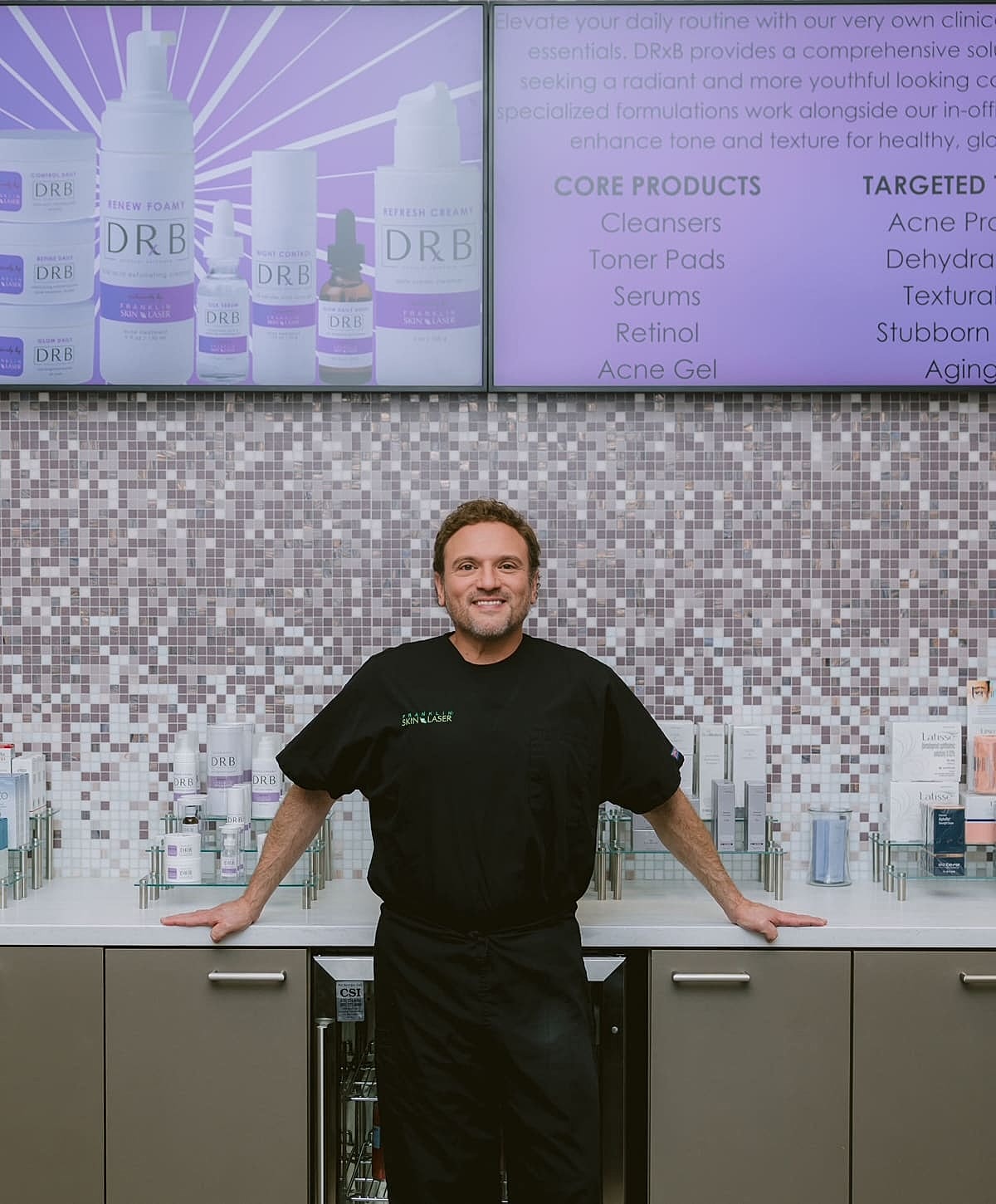
Steven Bengelsdorf, M.D., F.A.C.S., is a board-certified surgeon and the medical director of Franklin Skin and Laser in Franklin, Tennessee.
With more than 20 years of experience, he specializes in non-invasive aesthetic care, cosmetic dermatology, and energy-based treatments. Dr. Bengelsdorf is a Fellow of the American College of Surgeons and the American Society for Laser Medicine and Surgery. He supervises the practice’s licensed nurses and medical aestheticians, helping ensure that each treatment plan reflects the patient’s skin, goals, medical history, and safety needs.
Schedule a consultation with the team at Franklin Skin and Laser today by calling us at (615) 595-8177 or by filling out our online consultation form.