Published
8 minute read
Laser hair removal can be safe and effective for darker skin tones with the right device and settings.
A statement such as “works for every skin tone” isn't a lie for some devices, but it isn't necessarily telling the entire truth, either. Laser light interacts with pigment. Darker skin contains more melanin at the surface, which means the treatment has to reach the hair follicle without delivering too much heat to the surrounding skin. So while yes, a laser may work for every skin tone, it may not be nearly as effective. It's important to have a doctor who knows the finer details of their laser hair removal devices and its settings, so that you get the safest, most effective experience possible.
At Franklin Skin and Laser, I use the dual-wavelength Candela GentleMax Pro®. It gives me access to both an Alexandrite laser and an Nd:YAG laser within the same platform. That choice allows me to match the wavelength to the patient’s skin color, hair characteristics, and treatment area for maximum safety and efficiency.
Laser hair removal works through selective heating. The laser targets pigment within the hair shaft, and that light energy becomes heat. The heat travels into the follicle and damages the structures responsible for future hair growth.
Dark hair absorbs laser energy well because it contains a high concentration of pigment. Black hair and coarse dark brown hair often respond especially well.
The challenge with laser hair removal on darker skin is that the skin's surface also contains more pigment. If the wavelength or settings are poorly chosen, some of the laser’s heat may collect in the surrounding skin. That can lead to a burn, blistering, hyperpigmentation, hypopigmentation, or changes in skin texture.
The goal is to create enough heat within the hair follicle to reduce unwanted hair while limiting how much energy the skin absorbs. Wavelength is the pinnacle of that balance.
The GentleMax Pro combines two distinct laser wavelengths: the 755-nanometer Alexandrite laser and the 1064-nanometer Nd:YAG laser.
The Alexandrite wavelength has a strong attraction to melanin. It can be highly effective for dark hair on fair or lighter skin because there is a clear contrast between the hair pigment and the skin color. That strong pigment absorption also means I use it very carefully when treating darker complexions.
The Nd:YAG laser travels deeper into the skin and is absorbed less readily by surface melanin. This allows more of the laser energy to reach the hair follicle while reducing heat exposure at the skin’s surface. For that reason, the Nd:YAG wavelength is generally my preferred starting point for patients with brown or Black skin, particularly Fitzpatrick skin types IV through VI.
The longer wavelength does not remove the need for careful treatment. Pulse duration, energy level, spot size, cooling, hair thickness, and treatment location all influence how the skin responds.
Dual-wavelength laser technology offers more flexibility than a platform that relies on one wavelength for every patient. I can select the Alexandrite laser when it suits the patient’s coloring or use the Nd:YAG laser for darker skin tones. Some patients may fall between those categories, which makes an in-person skin assessment especially useful.
That flexibility also allows for treatment throughout the year as your skin tone changes. A patient who is safely treated with one approach during winter may arrive with a tan in July. Recent sun exposure can raise the amount of pigment in the treatment area, changing how the skin absorbs laser energy.
I assess the skin before each session rather than assuming the settings used at a previous appointment remain appropriate. If the area is tan, sunburned, irritated, or still changing color, I may postpone treatment. Your safety comes first, no matter what.
Hyperpigmentation is possible after laser hair removal, particularly when darker skin absorbs too much heat or experiences significant inflammation. The treated area may develop patches that appear darker than the surrounding skin. Burns can also lead to lighter areas, known as hypopigmentation.
Many pigment changes improve over time, though some can persist. Careful laser selection, conservative settings, effective cooling, and proper aftercare help reduce the risk.
Sun exposure adds another layer of concern. Tanning beds and direct sunlight increase pigment within the skin, making laser treatment less predictable. I ask patients to avoid sun exposure before and after treatment and use proper protection once the skin can tolerate sunscreen.
Hyperpigmentation can also develop when treated skin becomes irritated during recovery. Scrubbing, picking, heat, friction, and harsh skincare products can prolong inflammation. Following your aftercare instructions is especially important if your skin tends to form dark marks after acne, ingrown hairs, cuts, or burns.
For some darker-skinned patients, I may begin with a test spot. This involves treating a small section using the settings I am considering for the full area. We then observe how the skin responds before moving ahead with a broader treatment.
A test spot does not guarantee that a reaction cannot occur, but it does give me additional information about your skin’s immediate response and helps me refine your treatment plan.
Your medical history is incredibly important here as well. Tell me about previous burns, scarring, pigment changes, medications, recent tanning, and reactions to other laser treatments. I also need to know if you have an active rash, infection, open wound, or irritation in the treatment area.
The laser needs pigment in the hair to create heat. Dark hair generally responds better than blonde, white, gray, or red hair, regardless of skin tone. Very fine hair may also be difficult to treat because it contains less pigment and has a smaller target.
The ideal combination for an Nd:YAG laser is often darker skin with coarse, dark hair. Common treatment areas include the underarms, legs, bikini line, face, chin, neck, chest, back, and abdomen.
Laser treatment can also help patients who deal with ingrown hairs, razor burn, and bumps from shaving. Reducing the number and thickness of the hairs may lessen the cycle of hair curling back into the skin.
Hormonal excess hair growth may require ongoing treatments because the body can continue stimulating new hair follicles. Laser hair removal can reduce the existing unwanted hair, while medical evaluation may be useful when facial or body hair changes suddenly.
Hair grows in cycles, and the laser works best when a follicle is in its active growth phase. Only a portion of the hair is active during any one appointment, so multiple treatments are needed to reach more follicles over time.
Most patients require a series of approximately six or more sessions. The exact number depends on the treatment area, hair color, thickness, skin type, hormones, and response to treatment. Maintenance sessions may be needed as new hair appears.
Before each appointment, shave the treatment area as directed. Avoid waxing, plucking, or threading because those hair removal methods pull the target out of the follicle. The hair should remain beneath the skin even though the visible portion has been removed.
During treatment, you will wear protective eyewear. Each pulse may feel like a warm snap from a rubber band. The GentleMax Pro uses an integrated cooling system to protect the skin surface and improve comfort. A numbing cream is usually unnecessary, though it may be considered for selected sensitive areas.
Mild redness, warmth, or small raised bumps around the treated hairs can last for a few hours. Keep the area cool, avoid unnecessary friction, and follow the instructions provided for sun protection and skincare.
Laser hair removal for dark skin requires more than access to a laser. The wavelength has to suit the skin, and the settings need to account for the hair, treatment area, recent sun exposure, and individual response.
The 1064-nanometer Nd:YAG wavelength gives me an important option for darker-skinned patients because it reaches the follicle with less absorption by pigment at the skin’s surface. The 755-nanometer Alexandrite wavelength remains highly useful for lighter skin tones. Having both within the GentleMax Pro allows me to build a treatment plan around the person in front of me.
My team and I provide laser hair removal for patients from Franklin, Brentwood, Cool Springs, Nashville, and throughout Middle Tennessee. We will assess your skin and hair in person before recommending a treatment plan.
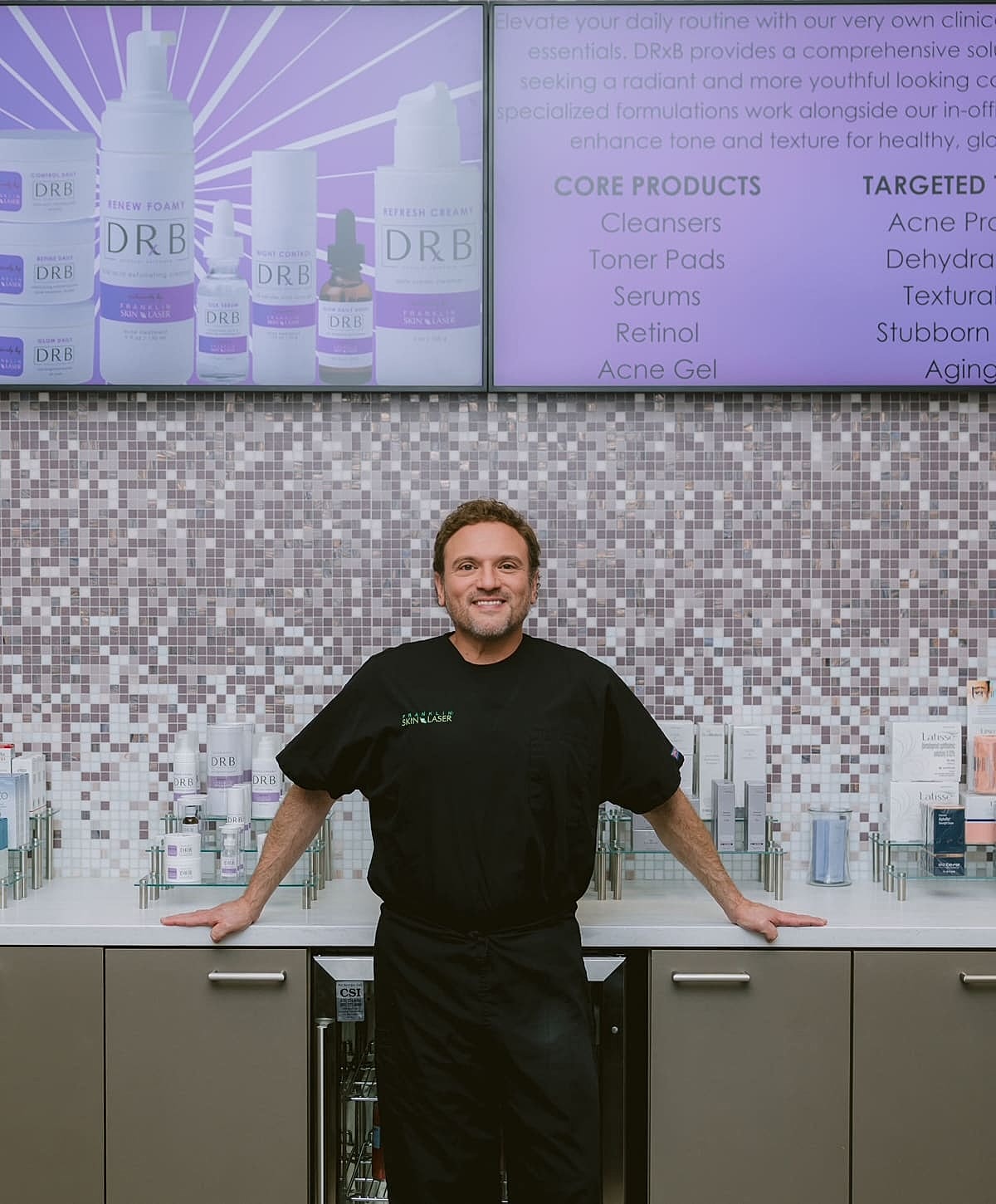
Steven Bengelsdorf, M.D., F.A.C.S., is a board-certified surgeon and the medical director of Franklin Skin and Laser in Franklin, Tennessee.
With more than 20 years of experience, he specializes in non-invasive aesthetic care, cosmetic dermatology, and energy-based treatments. Dr. Bengelsdorf is a Fellow of the American College of Surgeons and the American Society for Laser Medicine and Surgery. He supervises the practice’s licensed nurses and medical aestheticians, helping ensure that each treatment plan reflects the patient’s skin, goals, medical history, and safety needs.
Schedule a consultation with the team at Franklin Skin and Laser today by calling us at (615) 595-8177 or by filling out our online consultation form.